
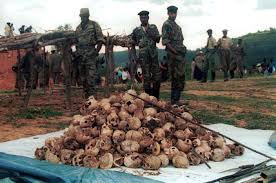
 When it comes to genocide in the Bible, I'm not so much concerned with questions like "How should I live today? Does God want me to partake in genocide against non-believers?" For me, the Canaanite Genocide raises questions about God's nature. It's difficult to defend God against the charges brought against Him. Yes, God commanded the Israelites to slaughter all the men, women, children, and animals in the Promised Land. And yes, Christians have committed atrocious acts for a couple thousand years, probably under the impression that these texts sanction their violence. Conservative biblical apologists argue that these commands were indeed just and right decrees issued by a Holy God; however, these commands do not apply to anyone and everyone. They were given to a specific people at a specific time, not to me, not to you, not to extremist pro-lifers, Crusaders, or conquistadors. Liberal apologists condemn the genocide as ungodly and blame the Israelites, who wrote their own history (the Old Testament) and justified their sin through their God's mouth. But regardless of positions, both camps usually emphasize the necessity of correct biblical interpretation in order to understand this dilemma.
But I wonder how often these Christian apologists enter the caves and deserts fully armored with their correct biblical readings ... but end up exhausting their hermeneutics cache when confronted with the sacred books of the pagans? Are they reading other holy books with the same precision? Since 9/11, we've all heard the endless banter from the priests and pundits: "Islam is not a peaceful religion! These extremists are following the dictates of their holy book, for the Quran charges Muslims to 'kill the infidels!' Therefore, the religion itself is destructive." And I've heard this argument from the mouths of fundamentalist Christians who defend God's slaughter of His own infidels, yet attack Allah's.
Now I'm not arguing here that either religion is peaceful or not peaceful. I'm arguing that religious people might want to handle the texts of the infidels with the same care in which they handle their own. As I've supposed for some time now, Muslims have the same argument as Christians when it comes to defending their God against needless violence and oppression. The charge to "kill the infidels" (9.5) concerned a specific group of infidels who lived during a specific period in space-time history, not all infidels who walk the face of the earth from now to forever (See Helminksi Below). These Muslim apologists claim that this decree was given to specific people at a specific time, not to me, not to you, not to suicide bombers, Palestinians, or Osama bin Laden.
Both Christians AND Muslims use their Scriptures to defend their violence. And I guess their readings are somewhat justified if their argument is based on the nature of their God and His principles expressed in the past and applied in the now (an argument that I do not hold to; however, as I said above, this is where my questions form.) But if you plan to attack the other side, I think it best to play by the same rules.
For more information on this topic, you should read the article that prompted my thoughts. Kabir Helminkski explains the violent decrees in the Quran in "Does the Quran Really Sanction Violence Against 'Unbelievers'?" at The Huffington Post. Helminksi does not mention Christianity, but a helpful resource that does is the book SHOW THEM NO MERCY, which features four different theological perspectives concerning the Canaanite Genocide.
No comments:
Post a Comment